
The Truth About Ingrown Hairs
shaving, waxing, hair removal cream, or even laser, ingrown hairs can still happen


This topic is one of the most common concerns I hear about as an esthetician, and one of the most misunderstood. Let's get into the skin science behind why they happen, and what you can do to help minimize them.
There’s also, so much more to skin health than what we see on the surface! I dive a little deeper with my article, “Bacteria, Biofilm & the Skin Microbiome”, where we explore how these tiny communities can influence the skin and its overall health.
Jumping right in… an ingrown hair happens when a hair curls back into the skin instead of growing outward. This can lead to redness, inflammation, tenderness, and sometimes even discoloration. Here's a closer look at why it happens.
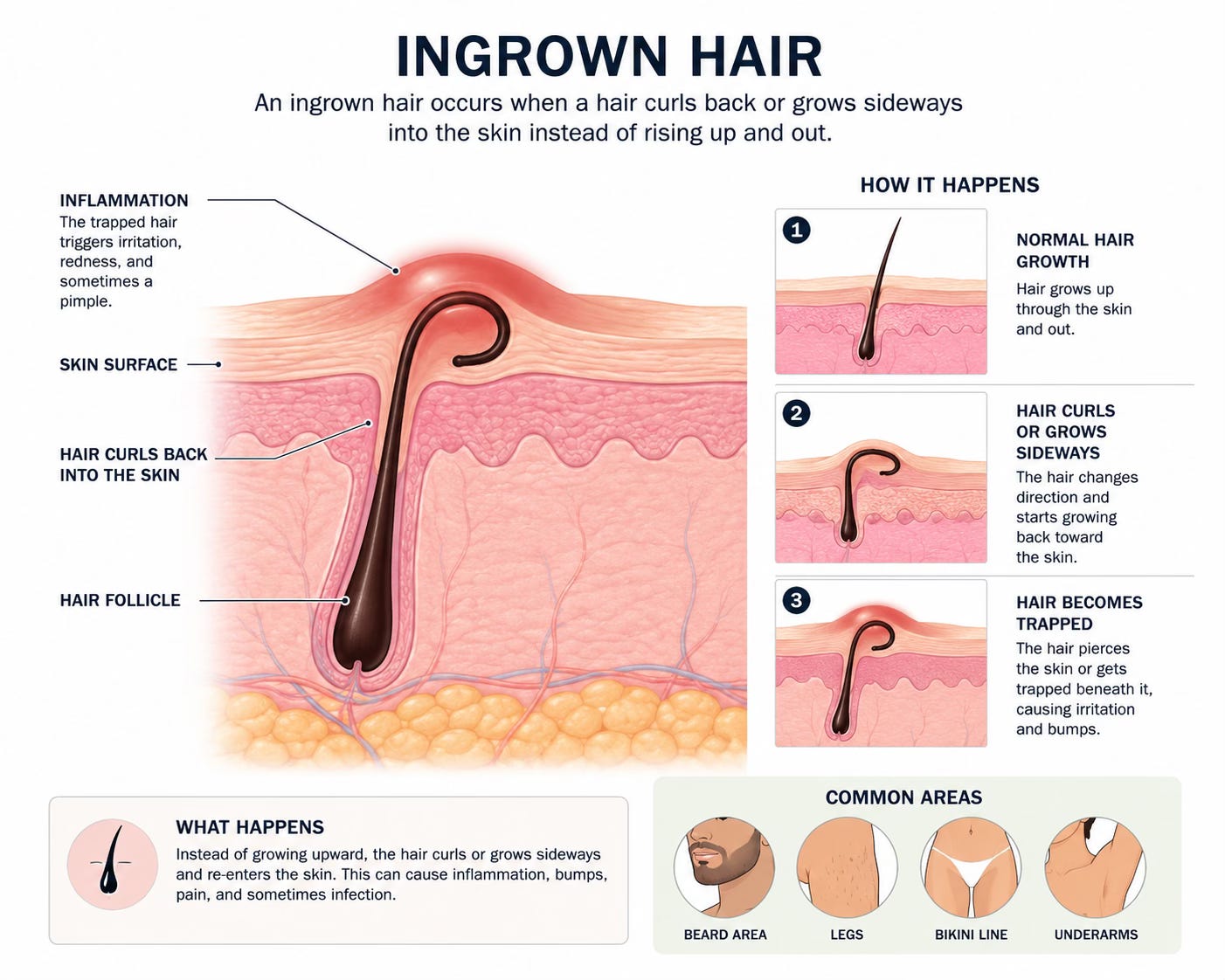
Ingrown Hairs 101
What Causes Ingrown Hairs?
Several factors can increase your chances of developing ingrown hairs:
Shaving too frequently
Dull razors
Dead skin buildup
Tight clothing causing friction
Curly or coarse hair types
Sweat and moisture
The Biggest Myth About Ingrown Hairs
False: Many people think ingrown hairs only happen with coarse or curly hair.
Truth: While textured or curly hair is more prone to ingrowns because the hair naturally curves back and can penetrate into the follicle, anyone can get them regardless of hair type or texture. Dead skin buildup, improper hair removal technique, tight clothing, and dry skin can all cause hairs to get trapped, no matter the hair's natural shape.
Waxing often helps reduce ingrown hairs over time because repeated waxing can lead to finer, softer hair growth.

Prep Your Skin Right
Preventing Ingrown Hairs Before They Start
Exfoliate regularly (2-3x per week) using physical exfoliations like a sugar scrub and gentle chemical exfoliants like mandelic, salicylic or glycolic acid (wait 48 hours after removal before exfoliating)
Keep the skin hydrated (hairs grow in easier when moisturized = less hair trapped)
Avoid tight clothing immediately after hair removal (let it breathe please 🙏)

Always use a sharp, clean razor (dull blades drag and cause hairs to snap at an angle)
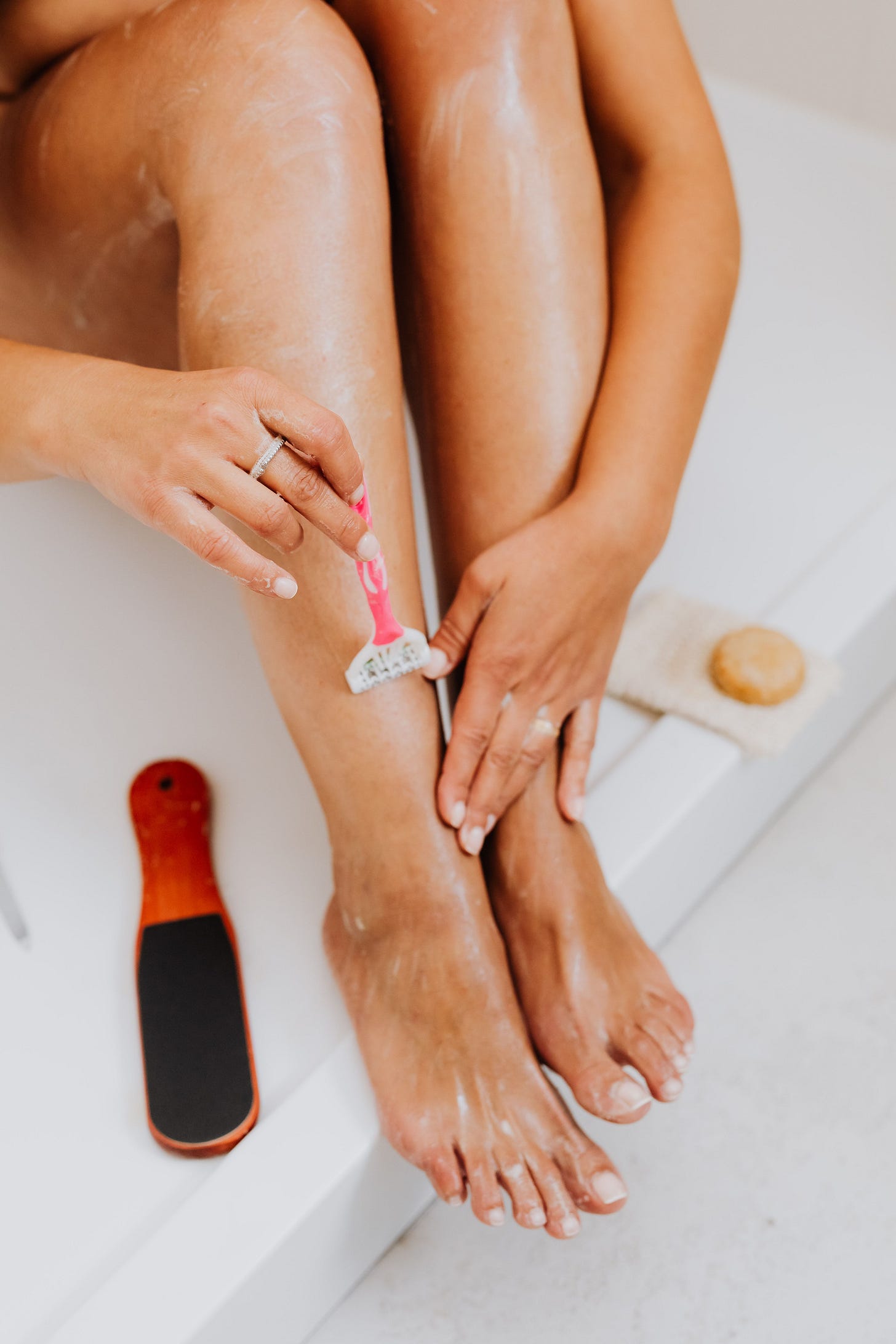
Photo: Kaboompics/ Pexels Shave in the direction of hair growth, not against it (this increases ingrown probability)
Rinse with cool water after to close pores (vajacial mask are great too)
Never leave depilatory creams like nair on longer than directed (over-processing can irritate skin and worsen ingrowns)
No sex for first 24-48 hours, no sauna/hot tub/pool/tanning bed first 24-48 hours, no working out or heavy sweating til pores close

After Hair Removal
The Guide to Keeping Skin Smooth and Bump-Free
Try incorporating mandelic acid into your skin care routine. It’s gentle enough for the face and intimate areas while still helping to prevent ingrowns and smooth texture. Avoid applying active acids to mucous membranes or broken skin.
If you're using an acid-based treatment, mandelic acid is a gentler pick. The larger molecular size + slower absorption = less irritating than glycolic or salicylic for ingrown hairs and dark spots.
Shop Circadia’s exclusive line, available only through licensed professionals like me, Use code WELCOME10 for 10% off your first order.


For goodness sake, DON’T PICK!

As tempting as it may be, picking at ingrown hairs can increase inflammation and lead to post-inflammatory hyperpigmentation (dark spots), scarring, and prolonged healing. Keep it protected with oil with healing properties and let the skin heal itself.
A hydrocolloid patch may protect it from friction and picking, but it isn't necessarily going to “pull out” the hair. If the ingrown has opened or is draining, then a hydrocolloid can be more useful because it can absorb the drainage and protect the area while it heals. Think of it as a protective dressing from bacteria, not an ingrown-hair treatment.
If the area is increasingly painful, hot, swollen, spreading red, producing significant pus, or repeatedly coming back, don't assume it's just an ingrown. Folliculitis and other conditions can look similar, and some cases need medical evaluation.
Say Goodbye to Ingrown Hairs: 4 Bushbalm Products on Amazon
I'm a huge advocate for supporting your local estheticians, cosmetologists, salons, and spas in the community. But let’s be real: waxing may not be your favorite hair removal technique. Regardless of the fact, having the right products on hand makes a real difference in how your skin heals. These three Bushbalm products are all easy to find on Amazon, which makes building a solid post treatment routine simple and easy.
1. Hydrogel Vajacial Mask - Immediately After
I like to use this immediately post-wax, layered over a targeted treatment serum; though they come treated with hyaluronic acid and aloe. The hydrogel helps drive the serum further into the skin instead of letting it just sit on the surface, so the skin stays deeply hydrated. It’s a nice way to calm freshly waxed skin while giving your products a boost. (life hack: put it in the refrigerator for 20 mins to help with redness and inflammation from hair removal. Not to mention, it feels amazing after a wax).

2. Ingrown Hair Oil - Daily Aftercare
This is great for the days right after waxing or shaving. It keeps the skin hydrated and helps protect it while it’s in that more vulnerable, freshly-exfoliated state. I use it daily starting right after the vajacial step. Treat your intimate skin the same way you treat your face and apply moisture after every shower. This helps hair grow in more easily and significantly cuts down on ingrown hairs.

3. Ingrown Hair Exfoliating Scrub - Wait 48 Hours First
Once you’re about 48 hours post hair removal, this scrub is great for clearing away dead skin and heading off ingrown hairs before they start. Timing matters here and using it too soon on freshly depilated skin can be irritating.

4. AHA/BHA Roller Rescue Serum - Prevent Ingrowns
This roll-on serum is great for staying ahead of ingrown hairs between waxes. The combination of AHA and BHA helps keep pores clear and skin smooth, so hairs have an easier time growing in without getting trapped. I like using it a few times a week as part of regular maintenance, not just right after waxing. Use this serum, then lock it in with oil.
Why Estheticians Swear By High Frequency (And You've Probably Never Heard of It)
The Pro-Level Ingrown Hair Trick Nobody Talks About
If you really want to level up your ingrown hair prevention game, a high frequency wand is worth adding to your routine. This tool uses a mild electrical current (don’t worry, it’s totally safe and just gives a slight tingling or warming sensation) to generate ozone, which has natural germicidal and anti-inflammatory properties.
Here’s why it works so well for ingrown hairs:
Kills bacteria on contact - helps prevent the kind of bacterial buildup in the follicle that can lead to ingrowns and folliculitis
Reduces inflammation - calms irritated, freshly waxed or shaved skin
Increases circulation - better blood flow means better healing and can help push trapped hairs to the surface
Dries out active breakouts - if you already have an inflamed ingrown, high frequency can help calm it down faster
How to use it: After cleansing, glide the wand over clean, dry skin for about 3-5 minutes per area. Some wands come with different electrode attachments; a mushroom or comb-style electrode tends to work well for larger areas like legs or the bikini line.
Note: skip this if you’re pregnant, have a pacemaker, epilepsy, or active skin infections and always remember to check with your provider if you’re unsure before trying any new recommendations.
Key Take Away
The truth and nothing but the truth
Ingrown hairs aren’t just a hair problem, they’re often a skin care problem.
Healthy skin creates a better environment for healthy hair growth.
Consistent exfoliation and hydration can go a long way in helping reduce bumps, irritation, and discoloration.
Smooth skin starts with proper care before and after hair removal.
And for the love of smooth skin, please go with the hair growth, not against it!
Bianca H.
Licensed Esthetician
Founder of The Pink Spot
Pompano Beach, FL

Medical Disclaimer: The information provided in this article is for educational and informational purposes only and is not intended as a substitute for professional medical advice, diagnosis, or treatment. Always consult a qualified healthcare provider regarding any medical concerns or before beginning a new skincare regimen.
Disclosure: This article may feature products available for purchase through our affiliate links. If you choose to make a purchase, we may receive revenue from the sale. Our editorial content is independently written and is not influenced by product sales.
Article References:
“Cleveland Clinic - Ingrown Hair”